FOREST ACADEMY
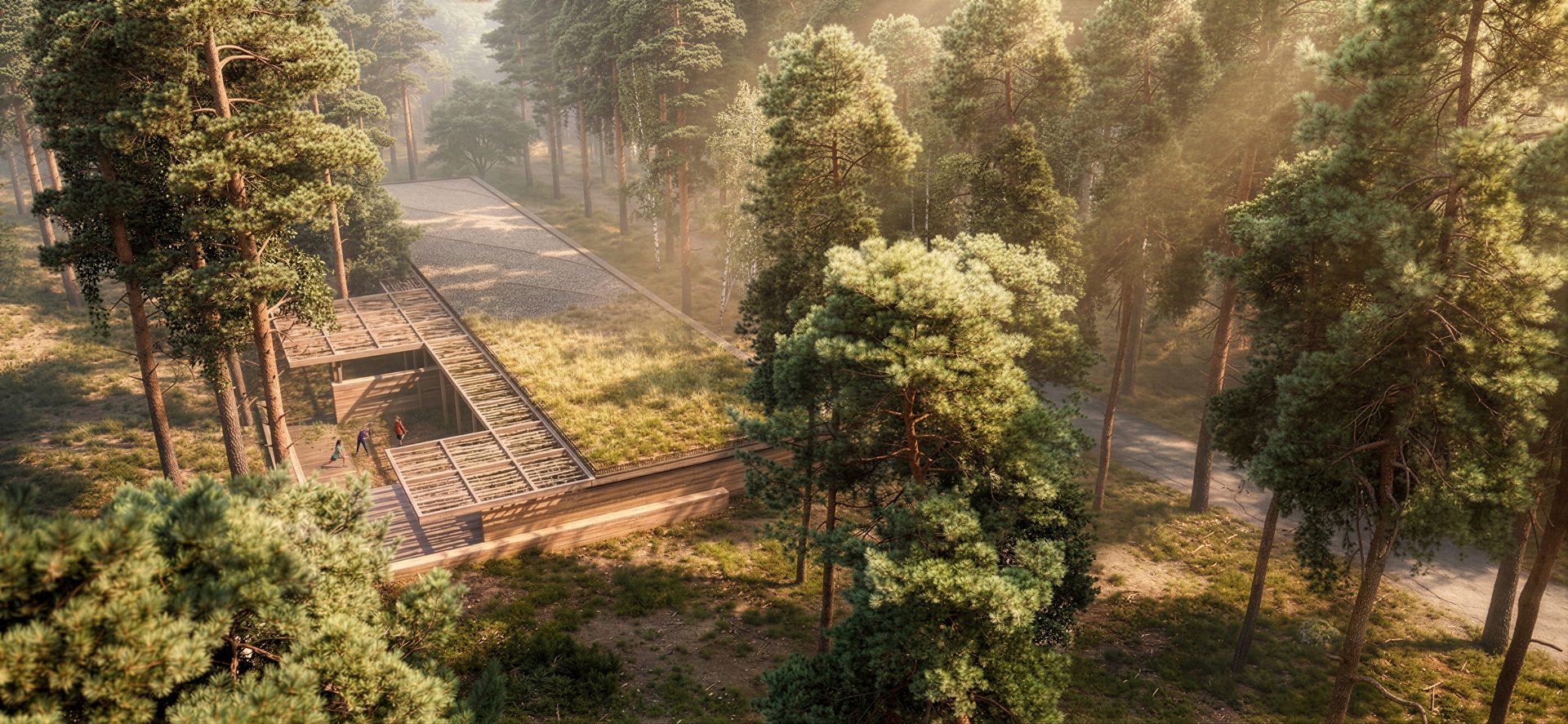
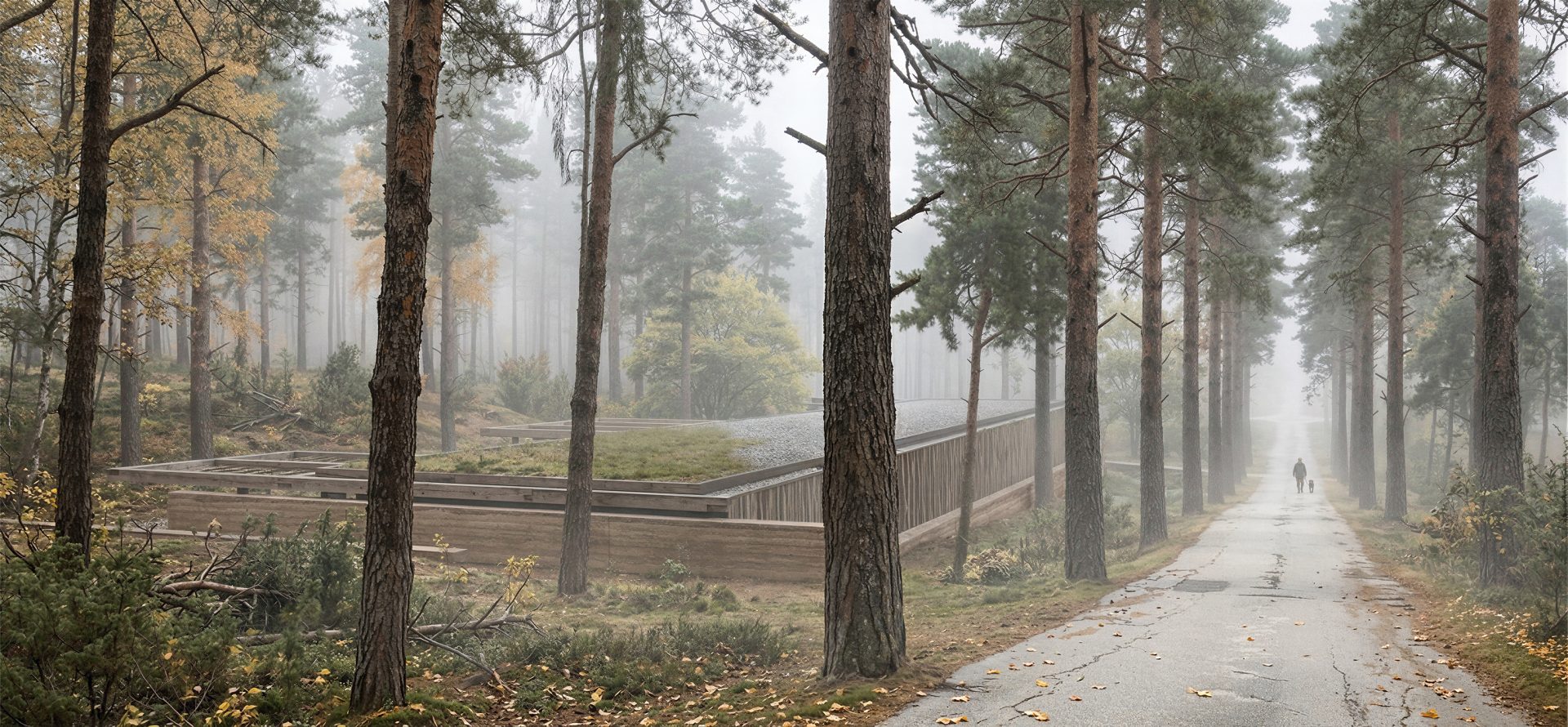
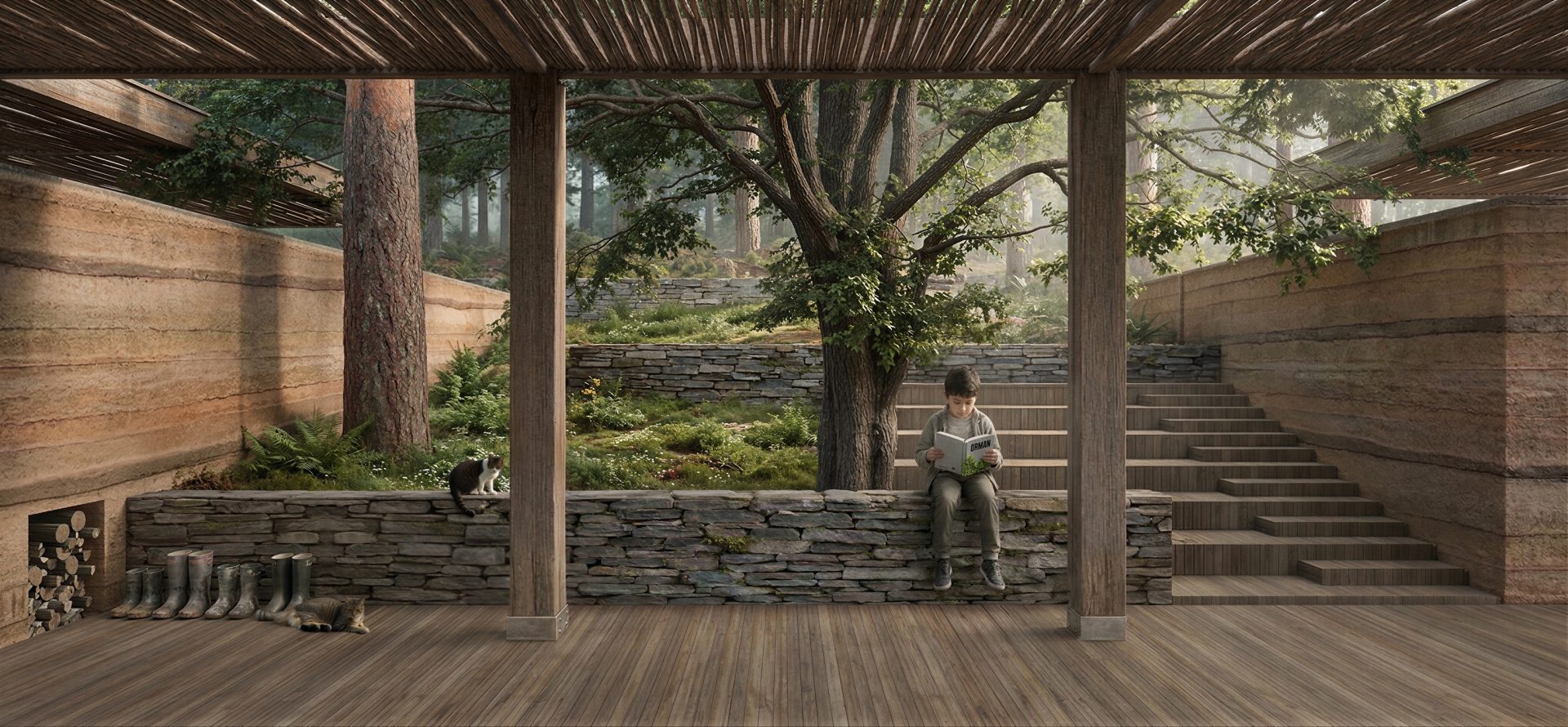
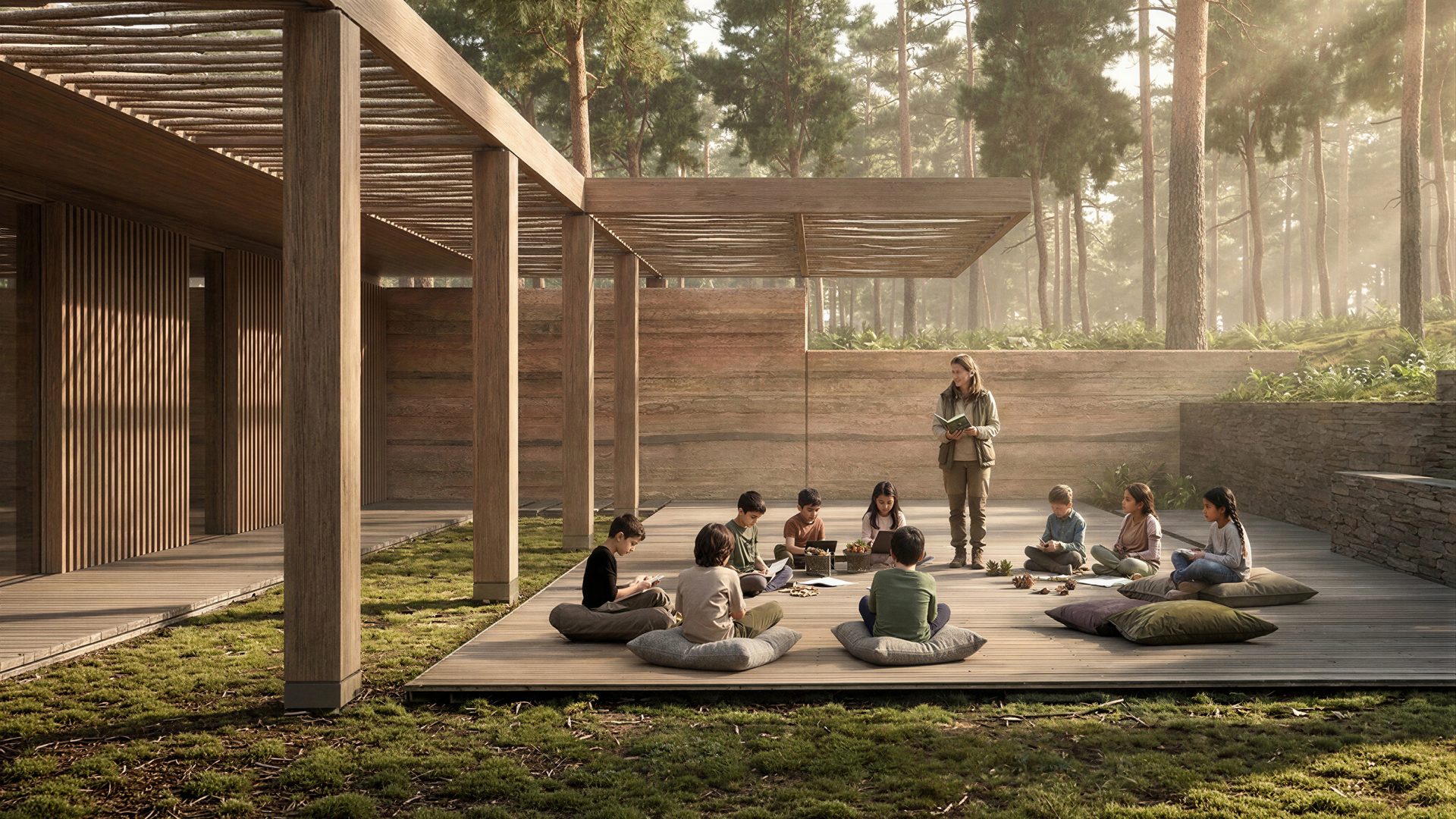
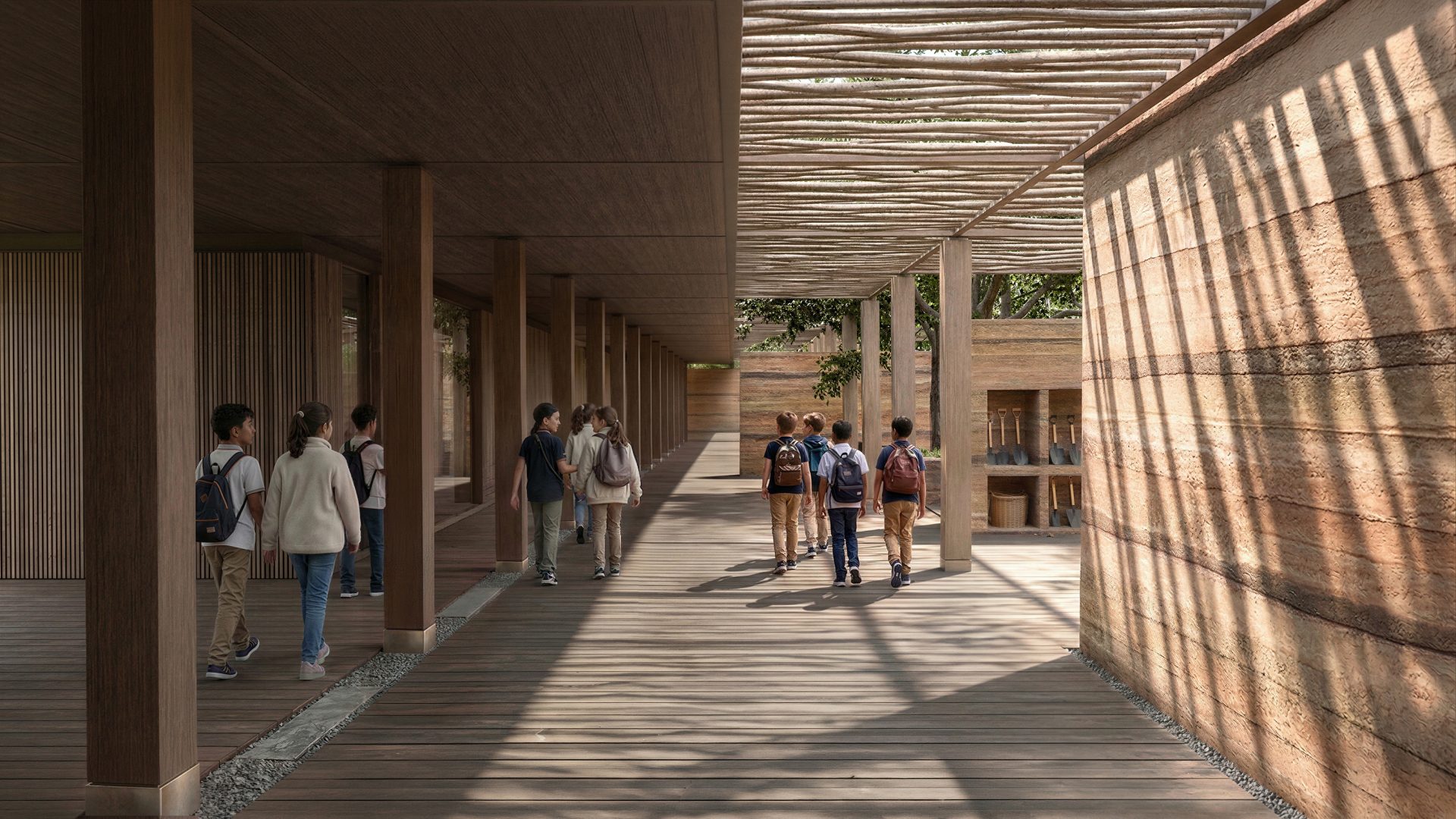
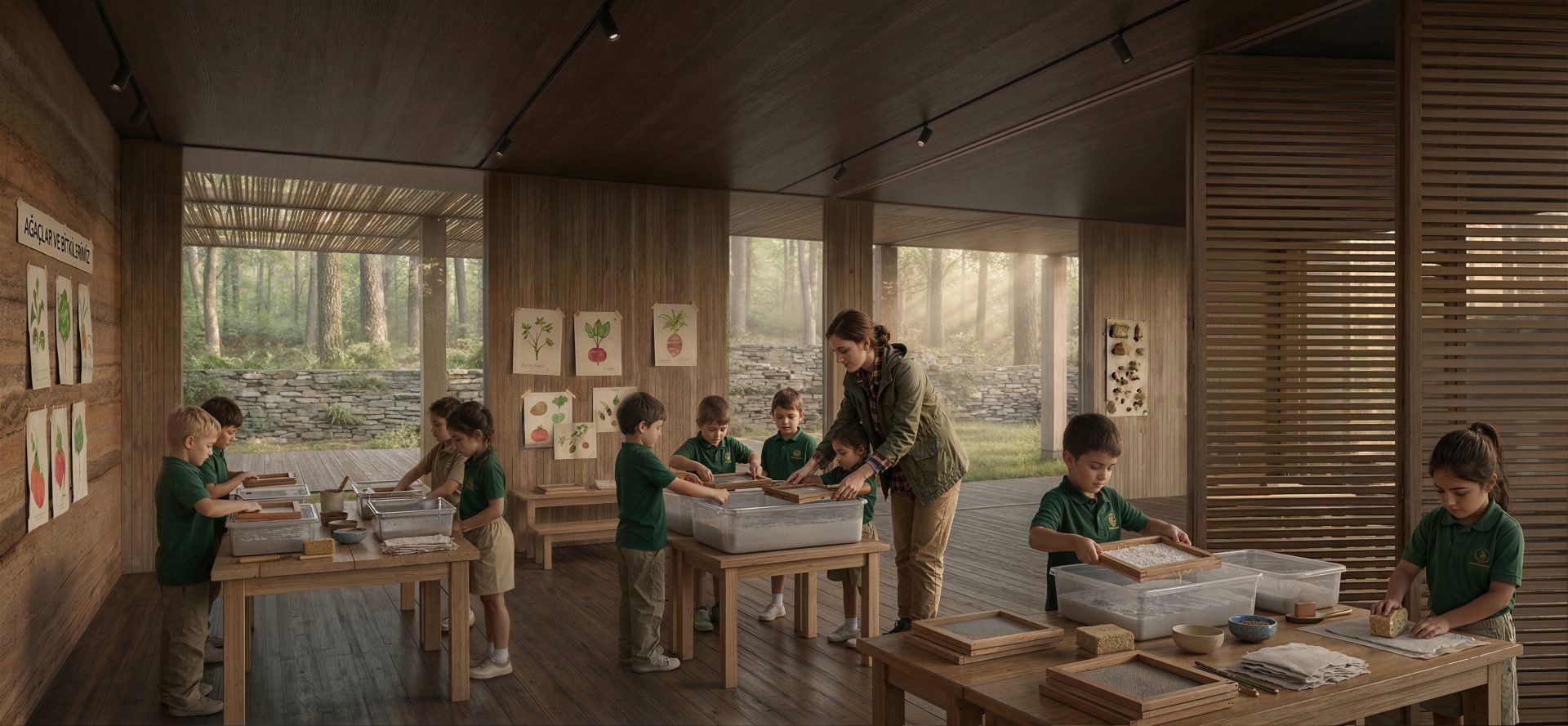
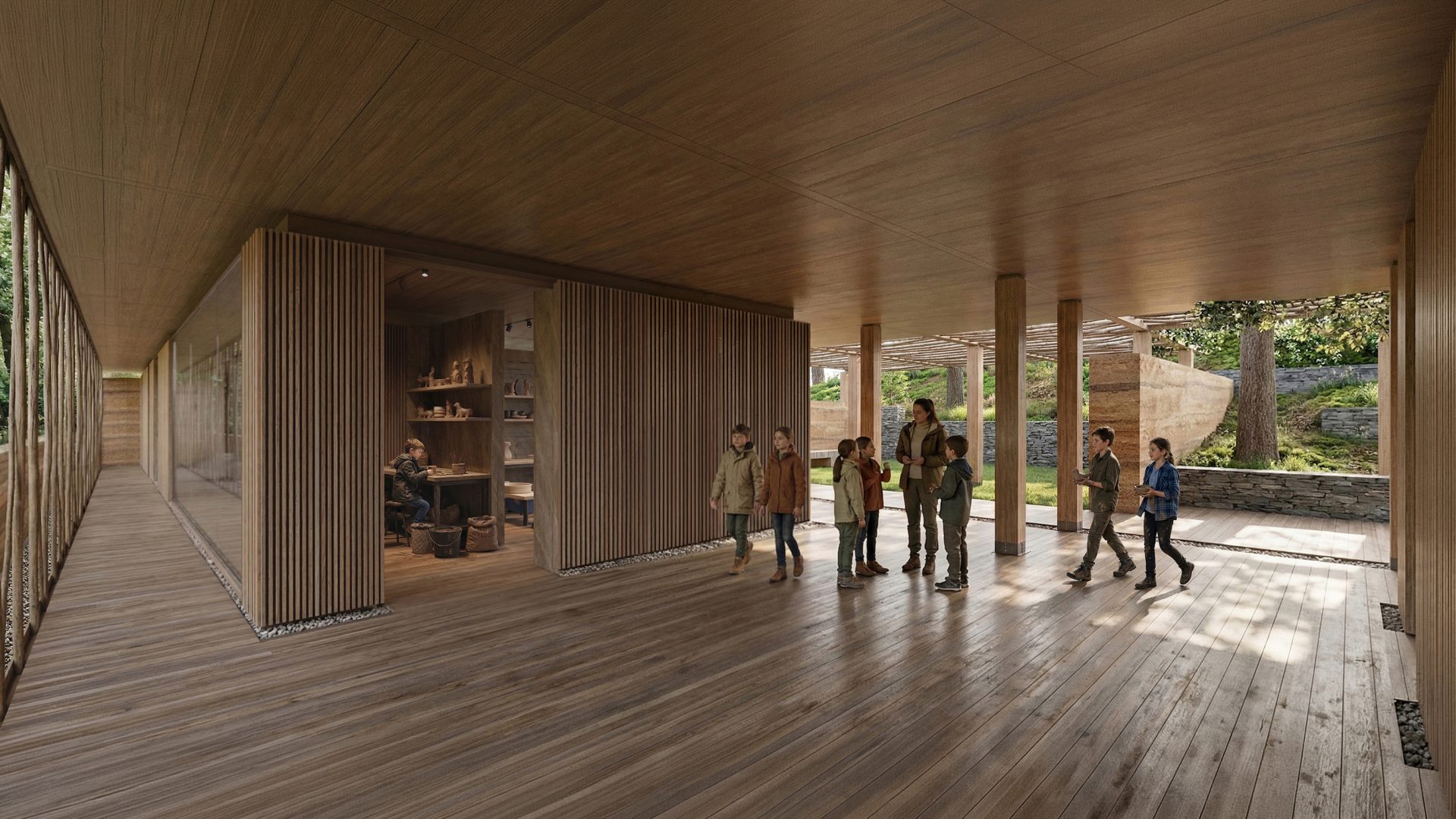
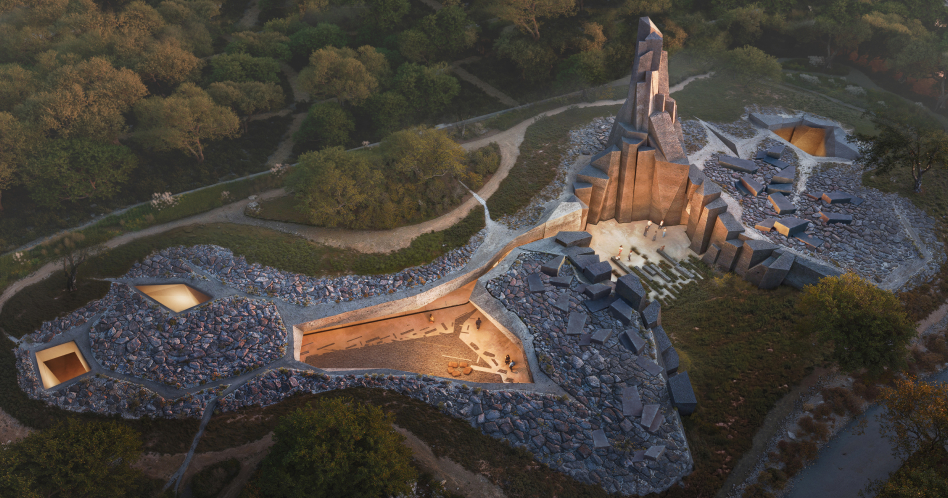
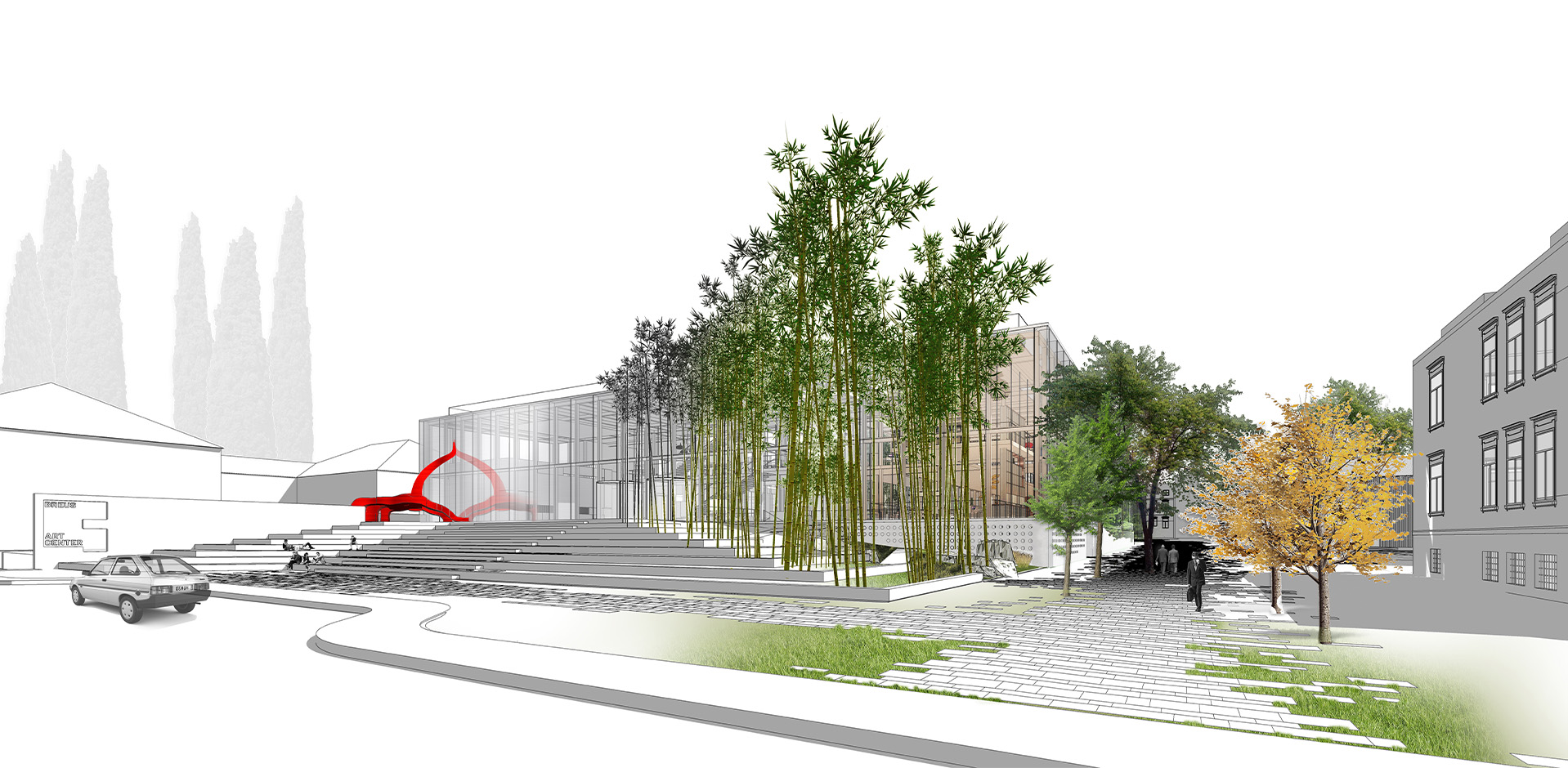
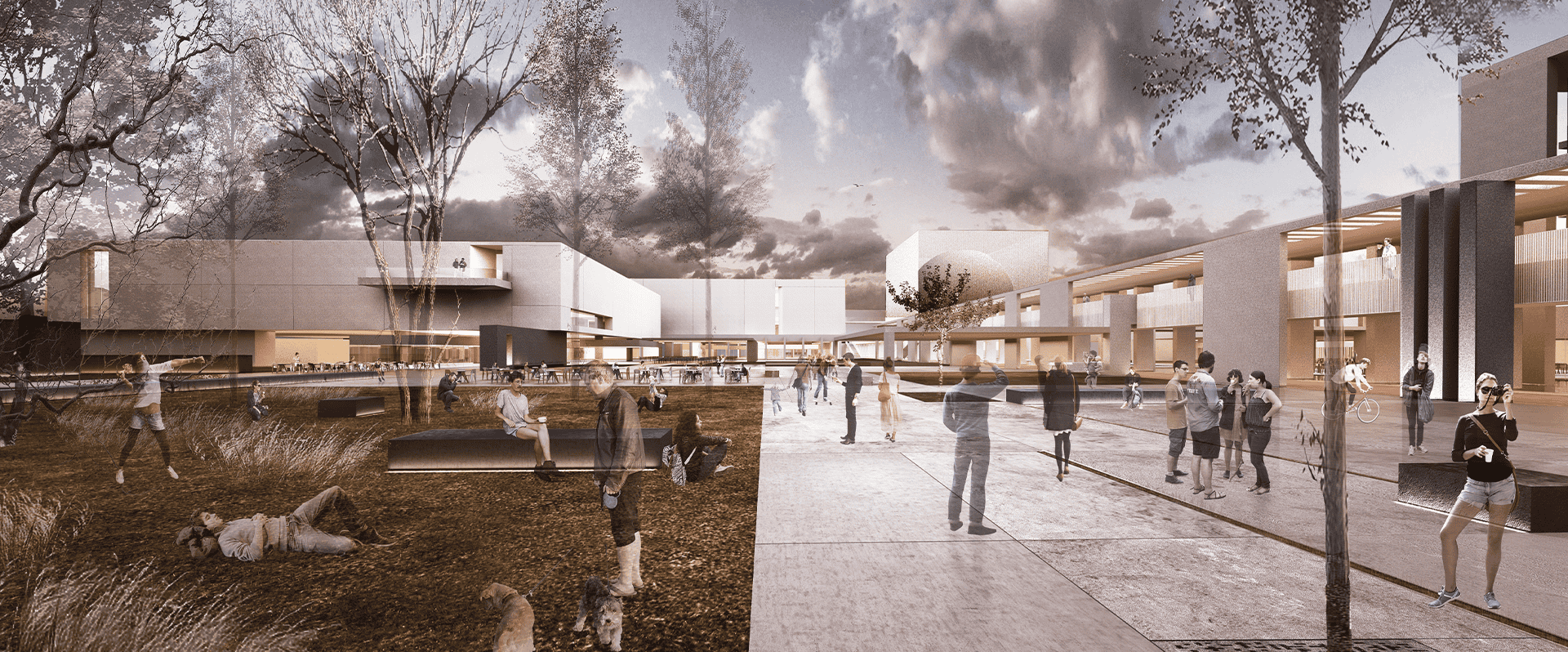
Conceived as a modest yet precise intervention within the dense ecological fabric of Atatürk Arboretum, the Forest Academy reinterprets learning as an immersive, bodily engagement with nature rather than a detached indoor activity. Rather than positioning education within enclosed rooms, the proposal unfolds as a spatial sequence that privileges exposure, transition and discovery, allowing the rhythms of the forest to shape the daily experience of its users. The project organizes a series of low scale programmatic units including workshops, ateliers and support spaces around a network of semi open thresholds that dissolve the boundary between built form and forest ground, establishing a continuous dialogue between interior and exterior conditions. Circulation is conceived not as a corridor but as an experiential route, where movement becomes part of the learning process itself.
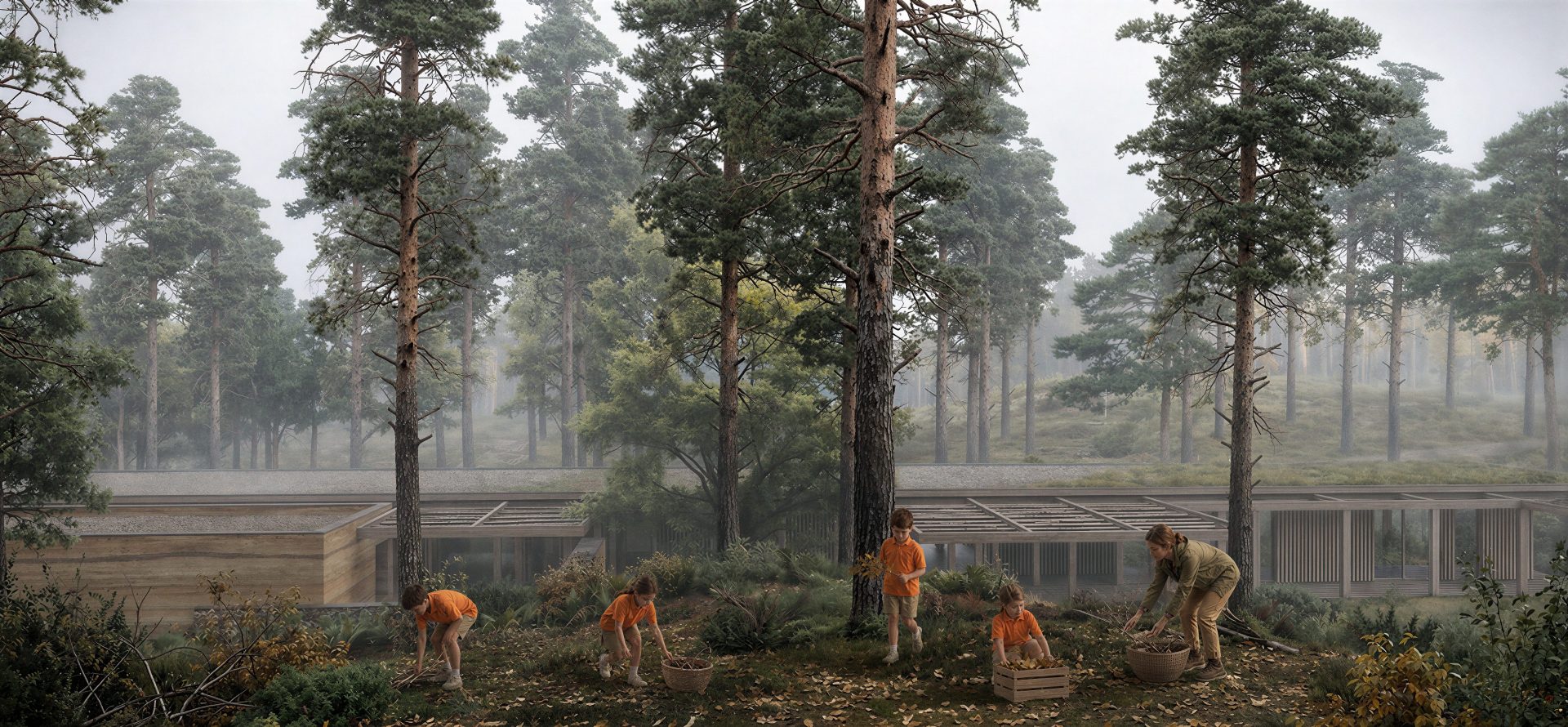
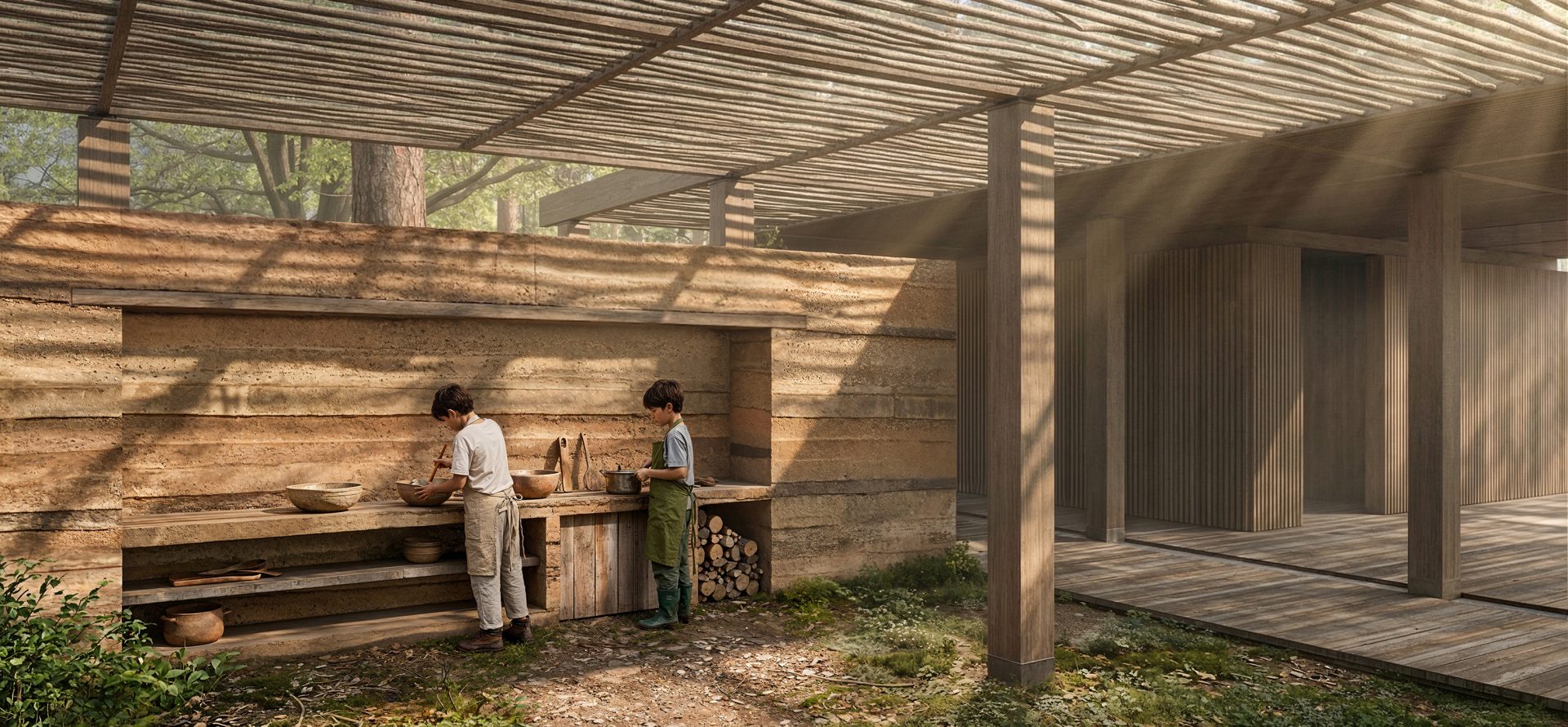
Anchored by outdoor elements such as the amphi-garden, mud kitchen and activity gardens, the spatial strategy prioritizes continuity, encouraging children to move fluidly between making, observing and playing while engaging directly with soil, water, vegetation and seasonal change. These open ended spaces are complemented by more protected volumes that provide moments of focus and retreat, creating a balanced gradient between exposure and shelter. Materially, the use of rammed earth, timber structures and natural textures establishes a tactile and legible environment where construction itself becomes part of the pedagogical experience, revealing processes of layering, weathering and time. Surfaces are not treated as neutral backdrops but as active interfaces that invite touch, interpretation and curiosity.
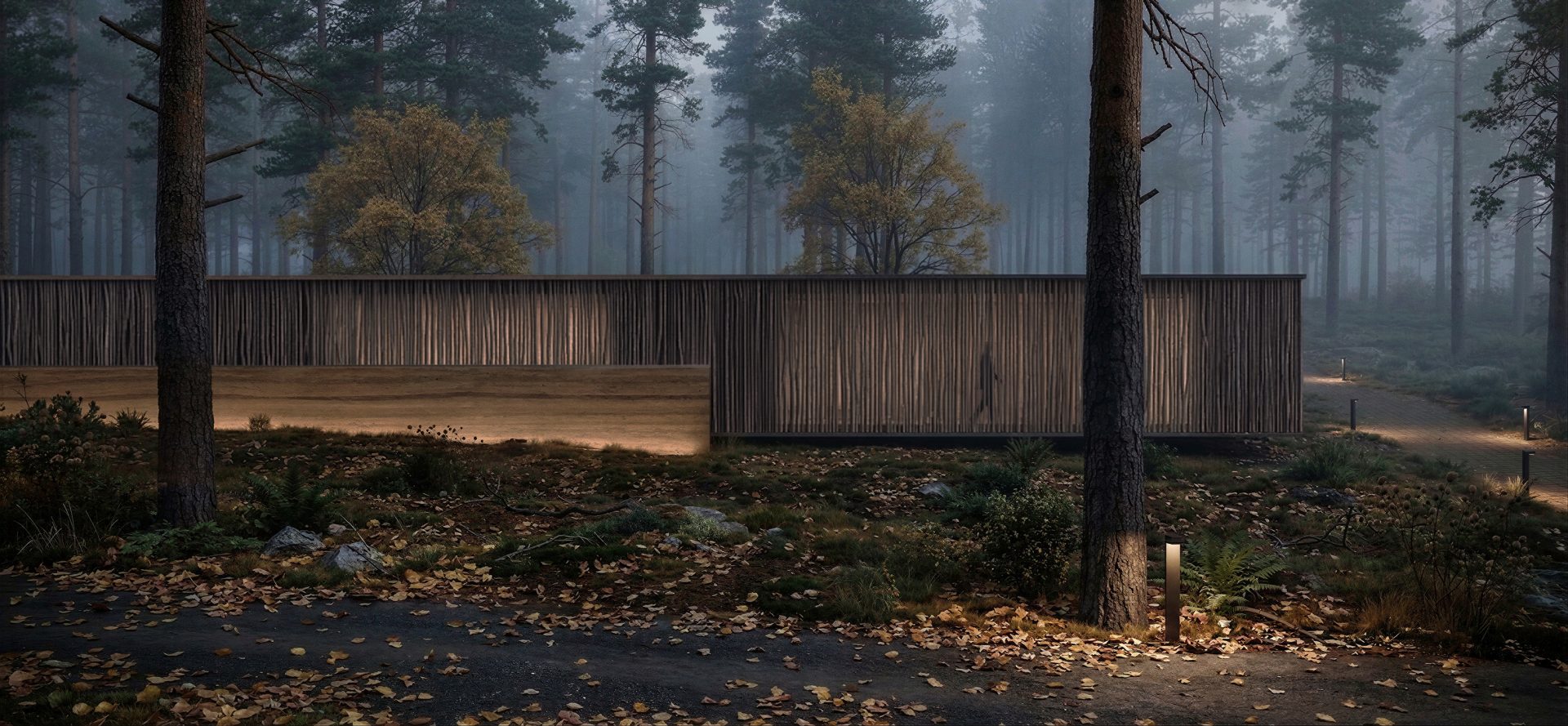
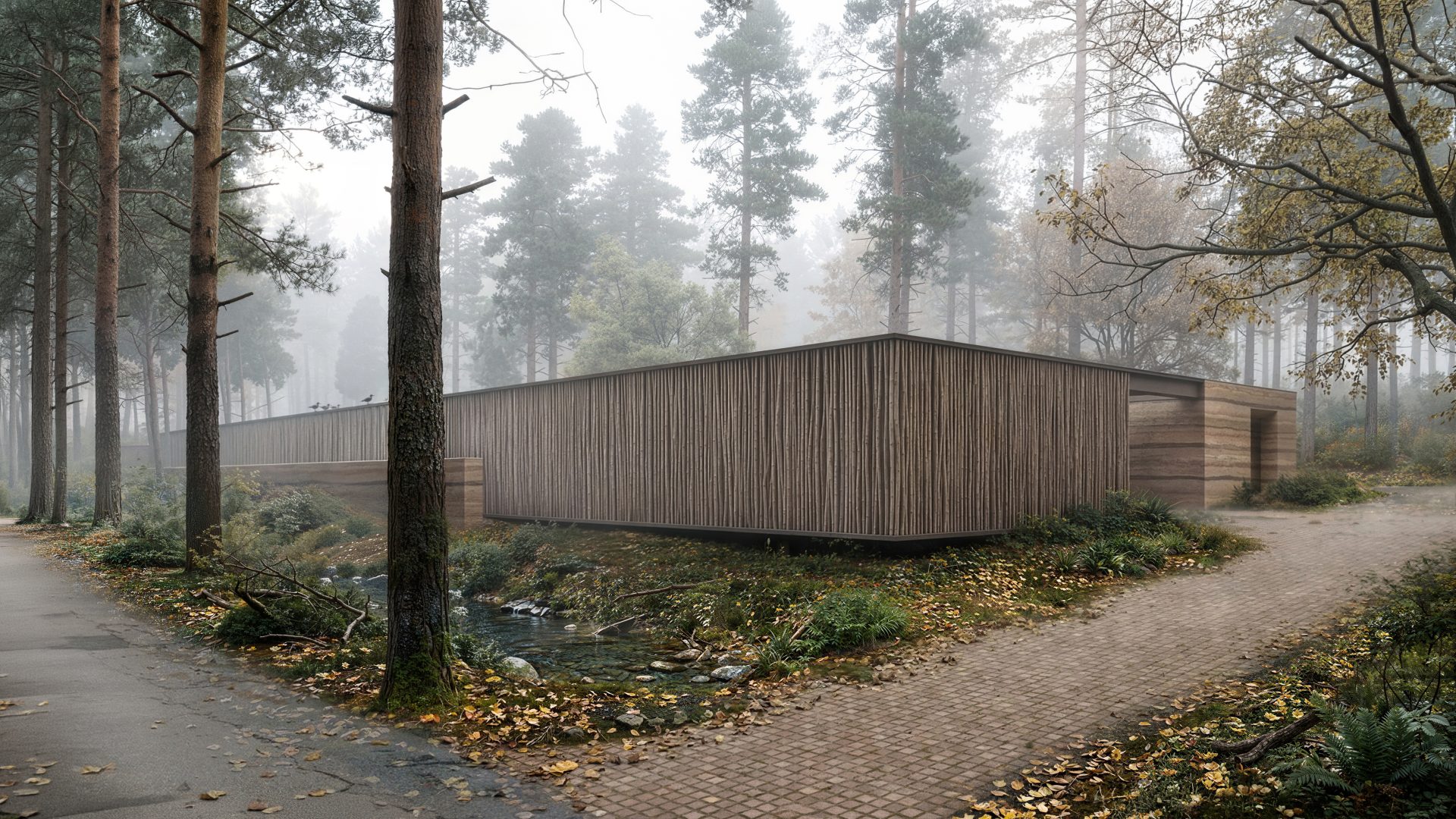
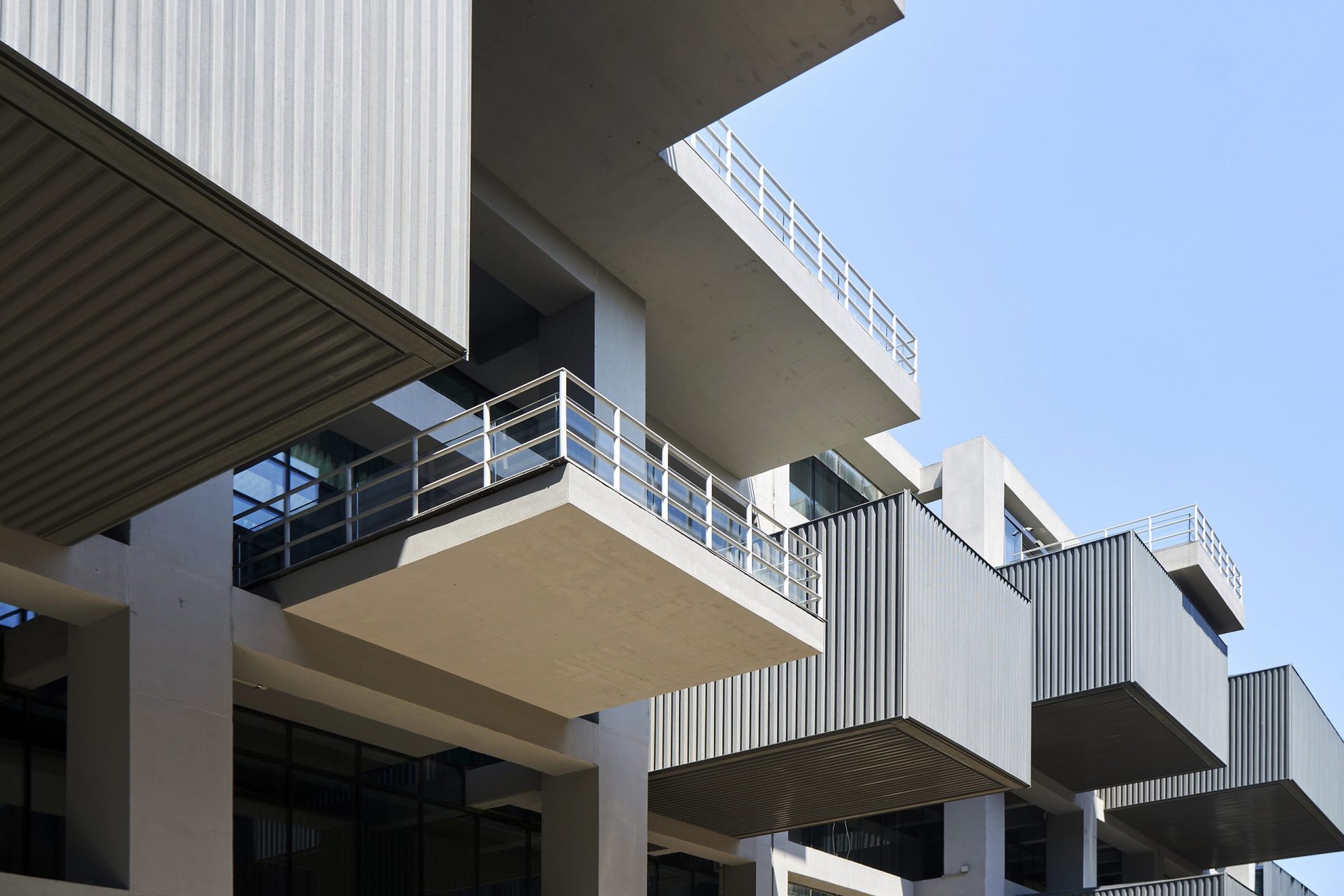
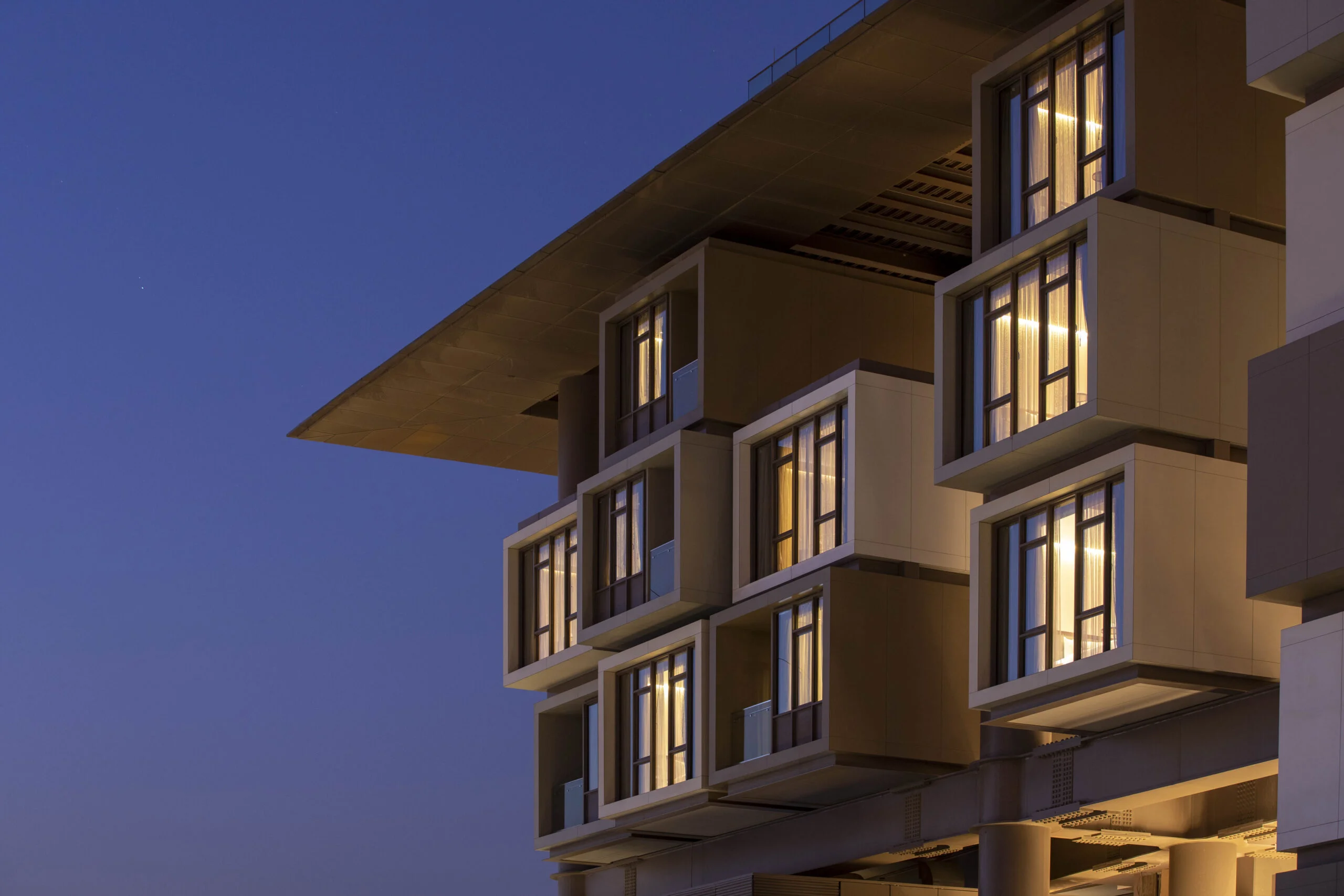
This approach extends to the façade, where a vertical articulation of slender wooden elements evokes the rhythm and density of surrounding tree trunks, softening the presence of the built edges and allowing the architecture to visually dissolve into the woodland. The façade operates both as a climatic filter and a perceptual device, modulating light, shadow and views while reinforcing the project’s intention to remain embedded within its context. Rather than imposing a singular architectural object, the proposal acts as a porous field condition that amplifies the existing landscape, framing the forest as both classroom and collaborator, and positioning architecture as a subtle mediator between human activity and the living environment.